

Introduction: The Changing Face of Raiding in World of Warcraft
Raiding has been the pinnacle of PvE content in World of Warcraft since its launch in 2004. Over nearly two decades, raid encounters have evolved dramatically, shifting from simple tank-and-spank fights to highly complex, multi-phase encounters requiring precise execution, movement, and coordination.
The evolution of WoW raid mechanics has been shaped by game design advancements, player expectations, and Blizzard’s ongoing effort to balance difficulty with accessibility. What once consisted of standing in one spot and mashing buttons has now transformed into dynamic boss fights with intricate interlocking mechanics, personal responsibility, and cinematic storytelling.
Understanding how WoW raiding has evolved over time provides insight into how the game’s philosophy has changed, how Blizzard has adapted to player feedback, and what the future of raiding might look like.
Classic WoW Raiding: The Era of Simplicity and Large-Scale Battles
1. The Birth of Raiding: 40-Man Content and Basic Mechanics
In Vanilla WoW (2004-2006), raiding was a massive, guild-driven effort that required 40 players to take down bosses in sprawling instances. The earliest raids, such as Molten Core and Blackwing Lair, were mechanically simple, often boiling down to:
- Tanks holding aggro while healers spammed heals.
- DPS standing in place and attacking until the boss was dead.
- Minimal movement mechanics outside of avoiding fire on the ground.
What made Classic raids difficult wasn’t their mechanics, but rather the logistical challenges of organizing 40 people, obtaining gear, and managing resistances (such as Fire Resistance for Ragnaros).
Encounters like C’Thun in Ahn’Qiraj and Kel’Thuzad in Naxxramas were considered ahead of their time, introducing phases and coordination-heavy mechanics, but most bosses still relied on raw numbers and gear over intricate mechanics.
The Burning Crusade: The Birth of Modern Raid Complexity
2. Reducing Raid Size and Adding Role-Specific Mechanics
With The Burning Crusade (2007-2008), Blizzard reduced raid sizes from 40 to 25 players, making encounters more tactical and coordination-focused.
This expansion introduced multi-phase fights, mandatory player roles, and more movement mechanics. Encounters like Lady Vashj, Kael’thas, and Archimonde required:
- Players to handle environment-based mechanics (e.g., avoiding Doomfire in Mount Hyjal).
- Coordinated add control (e.g., handling Shield Orbs on Kael’thas).
- Interrupt rotations, spell-reflect mechanics, and tank swaps to prevent boss buffs.
While still less punishing than modern raids, TBC marked the beginning of mechanically intricate encounters that rewarded proper execution over raw DPS numbers.
Wrath of the Lich King: The Rise of Hard Modes and Cinematic Raiding
3. The Introduction of Hard Modes and Phase-Based Raiding
Wrath of the Lich King (2008-2010) introduced raid difficulties for the first time, allowing players to opt into harder versions of fights for better rewards.
- Ulduar’s Hard Modes revolutionized raiding, giving players the option to trigger more difficult mechanics for stronger loot.
- Icecrown Citadel perfected phase-based fights, where bosses changed tactics as the fight progressed.
- The Lich King encounter introduced personal responsibility mechanics, such as defile spreading if a single player failed to move properly.
This was a turning point for WoW raiding, marking the beginning of cinematic storytelling in encounters and mechanically deep fights that required real-time adaptation.
Cataclysm and Mists of Pandaria: Refining Raid Design for All Skill Levels
4. LFR, Flex Raiding, and the Refinement of Raid Progression
With Cataclysm (2010-2012) and Mists of Pandaria (2012-2014), Blizzard shifted towards making raiding accessible to more players while still preserving high-end challenge modes.
- Looking for Raid (LFR) was introduced, offering a casual-friendly version of raid encounters with simplified mechanics.
- Flex raiding allowed dynamic group sizes, making raid organization easier.
- Encounters became even more phase-heavy, demanding precise execution at higher difficulties.
Bosses like Ragnaros (Firelands) and Lei Shen (Throne of Thunder) pushed the limits of raid complexity, incorporating heavy movement, split-group responsibilities, and strict DPS checks.
These expansions marked the shift from “classic raiding” to the modern era of highly technical encounters.
Warlords of Draenor and Legion: Mythic Raiding and Class-Specific Mechanics
5. The Birth of Mythic Raiding and the Most Complex Fights Ever Designed
Warlords of Draenor (2014-2016) and Legion (2016-2018) introduced Mythic difficulty, pushing encounters to their most extreme mechanical complexity.
- Boss fights like Archimonde (Hellfire Citadel) and Argus (Antorus) introduced raid-wide movement and survival mechanics.
- Mythic-only mechanics made encounters completely different from their Heroic counterparts.
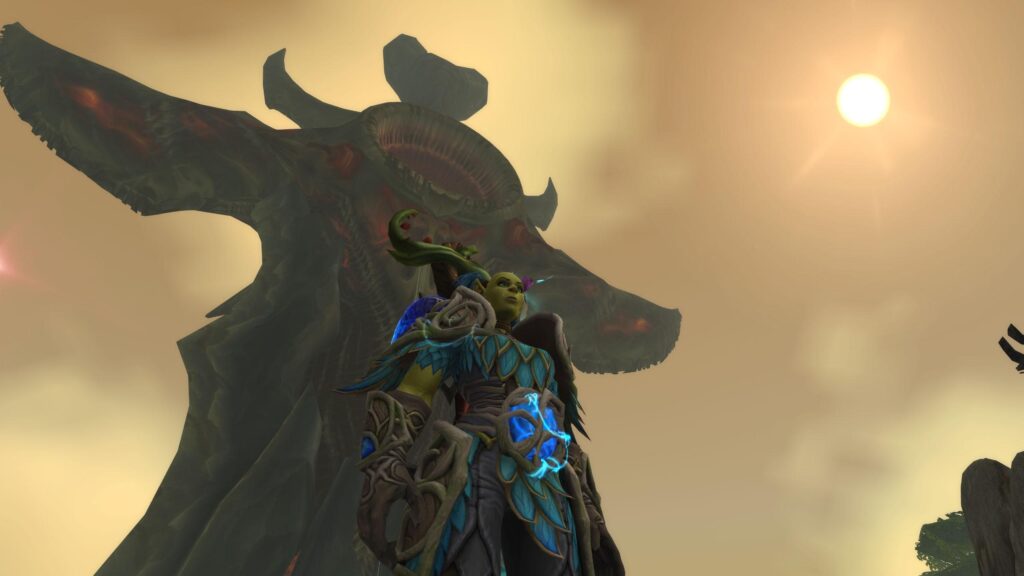
- Classes were expected to handle unique mechanics, reinforcing team synergy and role importance.
This era cemented Mythic raiding as the ultimate PvE challenge, forcing absolute coordination and flawless execution at the highest level.
Battle for Azeroth and Shadowlands: The Pinnacle of Raid Design
6. High Complexity, Role Consolidation, and Player Responsibility
With Battle for Azeroth (2018-2020) and Shadowlands (2020-2022), Blizzard pushed raid design to its absolute peak, introducing encounters that required:
- Personal responsibility mechanics where one player’s mistake could wipe the raid (e.g., Carapace of N’Zoth).
- Multi-dimensional fights where players entered different phases simultaneously (e.g., Denathrius in Castle Nathria).
- Mythic-only fight completions unlocking hidden phases (e.g., Sylvanas Windrunner’s secret Mythic phase).
Raiding had fully evolved into a high-intensity, cinematic experience that tested both mechanical execution and adaptability.
The Future of Raiding in The War Within and Beyond
7. Where Does Raid Design Go Next?
With The War Within (2024-2025), Blizzard is introducing even more raid innovations, including:
- Warband account-wide progression, making raiding more accessible across multiple characters.
- Deeper integration between Mythic+ and Raiding, ensuring gear pathways remain balanced.
- Dynamic environment-based fights, expanding beyond the traditional static raid arenas.
Raiding has evolved from simple tank-and-spank encounters to interactive, cinematic, multi-phase boss battles that test every aspect of player skill. As Blizzard continues refining mechanics, balancing difficulty, and introducing new innovations, the future of WoW raiding remains one of its most exciting aspects.
The question is: how much more complex can raid encounters get before reaching their absolute limit?
The Next Evolution of Raid Mechanics: How Far Can WoW Go?
With nearly two decades of raid encounters evolving from simple tank-and-spank fights to highly scripted, multi-phase battles, one question remains: What’s next for World of Warcraft’s raid mechanics?
Blizzard has always pushed the boundaries of raid design, finding new ways to challenge players, introduce innovative mechanics, and maintain engagement across multiple difficulty levels. However, as mechanics become more intricate and execution-heavy, we must ask: Is there a limit to how complex raid encounters can get?
Looking at the history of raid evolution, we can see clear patterns that give us clues about the future of WoW raiding.
The Balancing Act Between Complexity and Accessibility
1. Have Raids Become Too Mechanically Overwhelming?
One of the biggest shifts in modern WoW raids is that every single player must now execute mechanics correctly—a far cry from Classic WoW’s DPS-focused encounters, where only tanks and healers handled major responsibilities.
This raises an important concern:
- Has Blizzard made raiding too punishing for casual players?
- Can raiding still remain fun if every fight requires Mythic-level coordination, even on Normal and Heroic?
- Will Blizzard have to scale back complexity to avoid player burnout?
Looking at fights like Sylvanas Windrunner in Sanctum of Domination or Raszageth in Vault of the Incarnates, many players argue that the level of execution required, even on Heroic difficulty, is exhausting rather than fun.
To maintain long-term raiding engagement, Blizzard may need to strike a better balance between intricate mechanics and accessibility.
The Future of Raid Design in The War Within and Beyond
2. Environmental Interactions: Expanding Beyond the Boss Arena
A recurring challenge in WoW raids is that most fights take place in static arenas where players only interact with bosses, adds, and ground effects. However, Blizzard has experimented with environmental mechanics, and future raids could expand on this concept.
- Fights where players manipulate the terrain (e.g., bridges in Siege of Orgrimmar, moving platforms in Siegecrafter Blackfuse).
- More vertical movement-based mechanics (e.g., phase transitions in Argus and Raszageth).
- Boss encounters that dynamically change based on raid actions (e.g., triggering different paths or altering fight phases).
The next evolution of WoW raiding could push this further, making each encounter feel less like a static fight and more like an interactive adventure.
3. AI-Driven Boss Behavior and Randomized Encounters
Right now, most raid encounters follow scripted attack patterns, meaning players can study strategies in advance and predict every mechanic. But what if raid bosses became less predictable?
Blizzard has already tested:
- Adaptive AI mechanics, such as AI-controlled adds that react to player movement.
- Variable boss positioning, where bosses do not always stand in the same place (e.g., The Council of Blood in Castle Nathria).
- Procedural generation elements, where boss mechanics change each attempt (e.g., Sha of Pride’s corruption levels).
If Blizzard implements more adaptive AI-driven boss mechanics, raiding could become less of a memorization game and more about real-time decision-making.
Imagine a future where:
- A raid boss learns from your group’s movement and adjusts attack patterns accordingly.
- No two pulls are exactly the same, making each attempt a fresh challenge.
- Raid mechanics shift dynamically based on how players perform.
This type of design would make raid encounters far more engaging and replayable while preventing the “watch a guide, execute perfectly” approach that currently dominates raid progression.
Revolutionizing Raid Rewards: How Loot and Gearing Could Change
4. Expanding the Loot System for More Customization
One of the biggest frustrations with modern raiding is the random nature of loot drops. While systems like the Great Vault have helped, many players still feel that raid gearing lacks control and consistency.
Future raid loot systems could introduce:
- Player-chosen gear crafting from raid-earned materials.
- Dynamic item-level scaling based on progression milestones.
- More powerful “raid-only” gear effects that outperform Mythic+ items.
Loot innovations are crucial for ensuring that raid rewards remain meaningful and engaging. If Blizzard doesn’t adapt raid rewards to match the evolving gear landscape, raiding could lose its appeal compared to easier-to-farm content like Mythic+ and PvP.
The Social Aspect of Raiding: Can Blizzard Restore the Sense of Community?
5. The Decline of Guild-Based Raiding and the Rise of Cross-Realm Play
In Classic WoW and early expansions, raiding was deeply tied to guild communities, where players progressed together, built friendships, and relied on teamwork to succeed.
However, modern WoW has shifted toward a more individualistic approach, with:
- Cross-realm raiding allowing players to pug instead of joining a guild.
- LFR making raid bosses easily accessible without long-term commitment.
- Automated group finders reducing the need for guild coordination.
While these features have made raiding more accessible, they have also diminished the social experience of progression raiding.
For the future of WoW raiding, Blizzard could:
- Introduce more incentives for guild-based raiding, such as exclusive rewards or bonus loot for guild groups.
- Expand cross-faction raiding, making it easier for more players to group together without faction restrictions.
- Rework the raid finder system to encourage teamwork rather than just quick clear attempts.
If Blizzard wants to maintain long-term engagement with raiding, they must find ways to restore the social connection that once defined the experience.
Conclusion: The Endless Evolution of WoW Raids
From Molten Core’s simplistic tank-and-spank battles to the cinematic, multi-phase spectacles of recent expansions, World of Warcraft’s raid mechanics have evolved beyond what anyone imagined in 2004.
Each expansion has pushed raid design further, introducing new levels of mechanical complexity, player responsibility, and interactive storytelling. But as the game continues to evolve, several key questions remain about the future of raiding:
- How complex can raid mechanics get before they become too overwhelming for players?
- Will Blizzard shift toward more AI-driven encounters to create dynamic fights?
- Can raid rewards remain competitive with Mythic+ without creating gearing frustrations?
- Will the social aspect of raiding make a return, or is the future of WoW raiding purely about individual progression?
As The War Within and future expansions continue to expand raid content, Blizzard has a unique opportunity to refine the balance between challenge, accessibility, and reward. The next generation of WoW raids may not just test player skill—they may redefine how we experience endgame PvE altogether.
The question is: Are we ready for the next era of raiding, or have we reached the peak of what WoW can offer?
Leave a Reply