

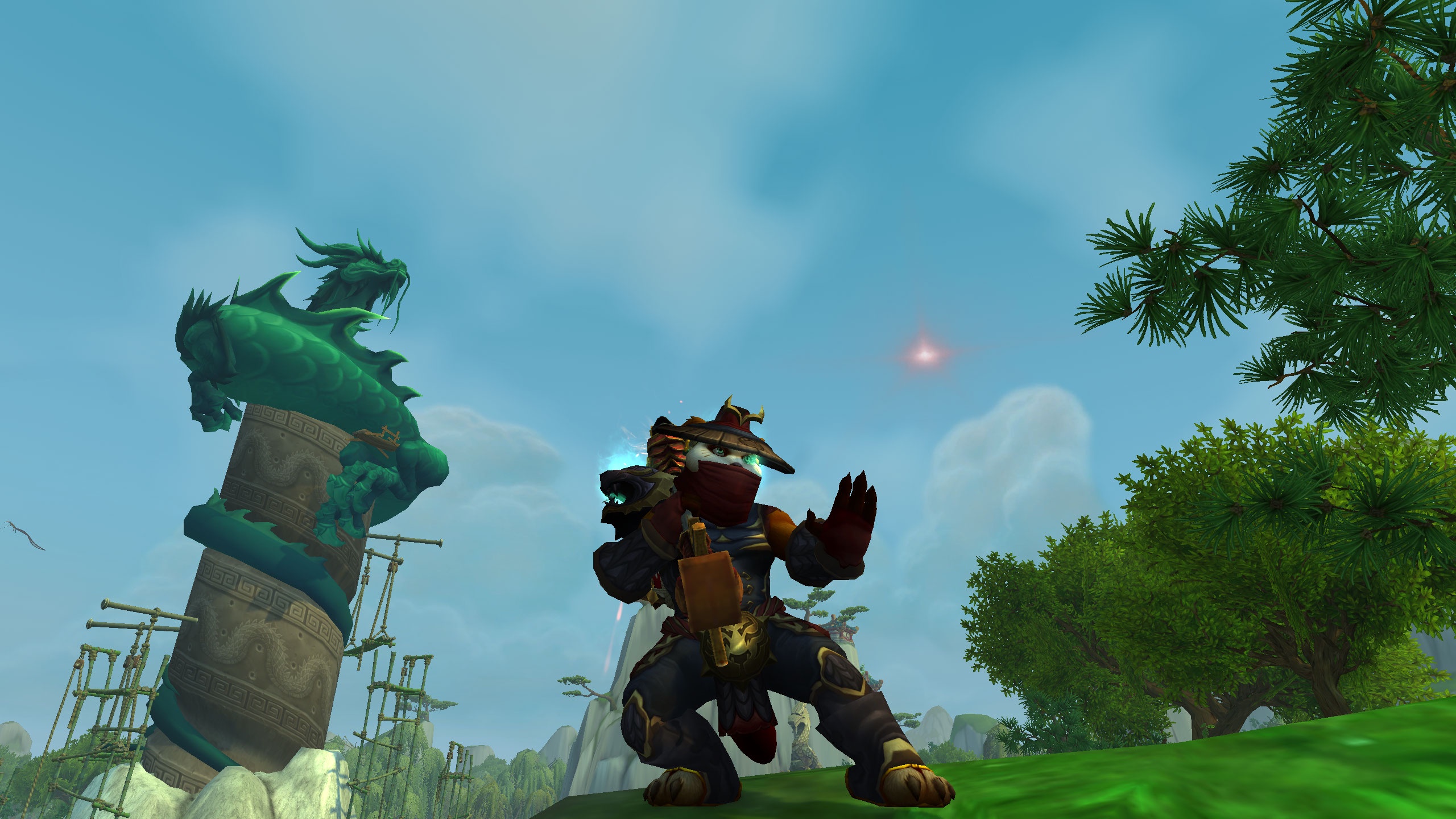
World of Warcraft’s classes have markedly evolved since its inception. It began with nine classic classes like Warrior and Mage, each with unique roles. Over time, expansions introduced new classes, such as Death Knights and Monks. Talent systems have seen major overhauls to boost character customization. Key expansions like Cataclysm redesigned class mechanics, while Legion introduced artifact weapons for further specialization. Shadowlands added the Covenant system, blending gameplay with narrative depth. The latest updates in Dragonflight offer new talent options, enhancing player agency. Each change builds on the last, creating a vast, evolving landscape of gameplay possibilities.

Key Takeaways
- WoW introduced new classes like Death Knights and Monks, each with unique mechanics and thematic ties to expansions.
- Class mechanics evolved with talent system overhauls, enhancing strategic depth and player customization.
- Flying mounts and role specialization changes revolutionized travel and class dynamics, encouraging hybrid roles.
- Innovations like achievements, phasing, and artifact weapons in expansions enriched gameplay and narrative integration.
- Ongoing class balance adjustments and new abilities preserve core identities while ensuring fairness and engagement.
The Birth of Classic Classes
In the beginning, there was a select group of classes that laid the foundation for what World of Warcraft would become. You’d find yourself choosing between nine unique classes, each with its own distinct class identity and gameplay mechanics. These classes included the Warrior, Mage, Rogue, Priest, Hunter, Warlock, Druid, Shaman, and Paladin.
Each offered a different style of play, allowing you to plunge into a world where your role in a group was clearly defined. Warriors, for example, were your go-to for tanking, taking the brunt of enemy attacks. Mages, on the other hand, excelled at dealing damage from a distance with powerful spells.
The gameplay mechanics for each class were designed to reflect their identities. For instance, Warriors relied on rage generated through combat to release devastating attacks. Meanwhile, Rogues required energy to execute their stealthy, quick strikes, emphasizing agility and cunning.

These mechanics were integral to how you’d experience the game, influencing your strategies in battles and interactions with others. The design of these classes was fundamental, setting the stage for the evolution of World of Warcraft and the development of its expansive, immersive world.
The Burning Crusade Additions
In The Burning Crusade expansion, you’ll find exciting additions like new races, the Blood Elves and Draenei, each bringing unique class options to enhance gameplay diversity.
The talent trees received a significant overhaul, offering more customization and strategic depth for your characters.
Plus, the introduction of flying mounts changed how you explore the Outland, adding a new layer to world navigation and questing.
New Races and Classes
Among the pivotal expansions in World of Warcraft, The Burning Crusade introduced two significant additions to the game’s roster: new races and classes that reshaped gameplay. This expansion gave players new race options with the inclusion of the Blood Elves for the Horde and the Draenei for the Alliance.
Blood Elves, with their unique aesthetic and lore, could access classes like Paladin, previously exclusive to the Alliance. Meanwhile, the Draenei brought the Shaman class to the Alliance, a role traditionally held by the Horde. This change enhanced class diversity, allowing for a broader variety of playstyles and strategies.
In The Burning Crusade, these additions allowed you to experience the game world in fresh ways. As a Blood Elf, you could harness your arcane prowess, while the Draenei offered a mystical connection to the Light.
These new race options broke down faction barriers, letting you explore different class abilities and interactions. With these changes, your gameplay experience could be personalized further, ensuring a more dynamic and engaging adventure.
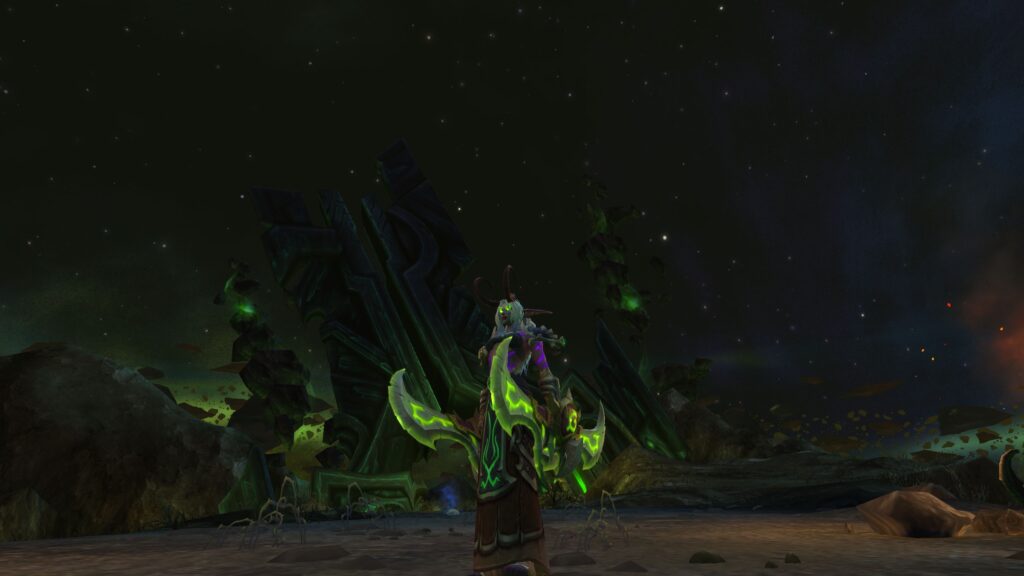
The introduction of these races and their respective classes marked a critical evolution in World of Warcraft’s ongoing legacy, enriching the game’s depth and flexibility.
Talent Tree Overhaul
The Burning Crusade not only expanded the World of Warcraft universe with new races but also revolutionized player progression through an extensive talent tree overhaul. This change introduced a new level of talent diversity and player choice, allowing you to customize your character’s abilities like never before.
With this overhaul, you could explore deeper into your class’s unique skills, choosing talents that best complemented your playstyle. The talent trees were expanded, offering new abilities and enhancements that provided more strategic depth.
- Enhanced Customization: You now had the opportunity to build your character in a way that aligned with your playstyle, whether it was focusing on damage, defense, or support.
- Increased Player Agency: The overhaul empowered you to make meaningful decisions about your character’s progression, enhancing your engagement with the game.
- New Synergies: With additional talents, you could create unique combinations that offered new opportunities in both solo and group play.
The revamped talent trees encouraged experimentation and allowed you to tailor your character’s abilities to meet the challenges of new dungeons and raids.
This thorough update was pivotal, providing a fresh and enriched gameplay experience that kept players invested and engaged.
Flying Mounts Introduction
Soaring through the skies of Outland became a reality with the introduction of flying mounts in The Burning Crusade. This addition revolutionized how you navigate the world. Flying mechanics allowed you to bypass obstacles and enemies on the ground, providing significant exploration advantages. You could now reach previously inaccessible areas, making traversal faster and more efficient.
When it came to mount selection, you’d a variety of choices, each catering to different aesthetic preferences. Some mounts, like the Netherwing Drakes, offered not just speed but also a visually striking presence.
Traversal speed was a key feature, with flying mounts generally doubling the pace of ground travel, drastically improving quest efficiency. You could complete tasks quicker by avoiding detours and directly reaching objectives.
The introduction of flying mounts also enhanced gameplay immersion, as you experienced the vastness of Outland from a bird’s-eye view. This innovation had notable expansion impacts, setting a precedent for future expansions.
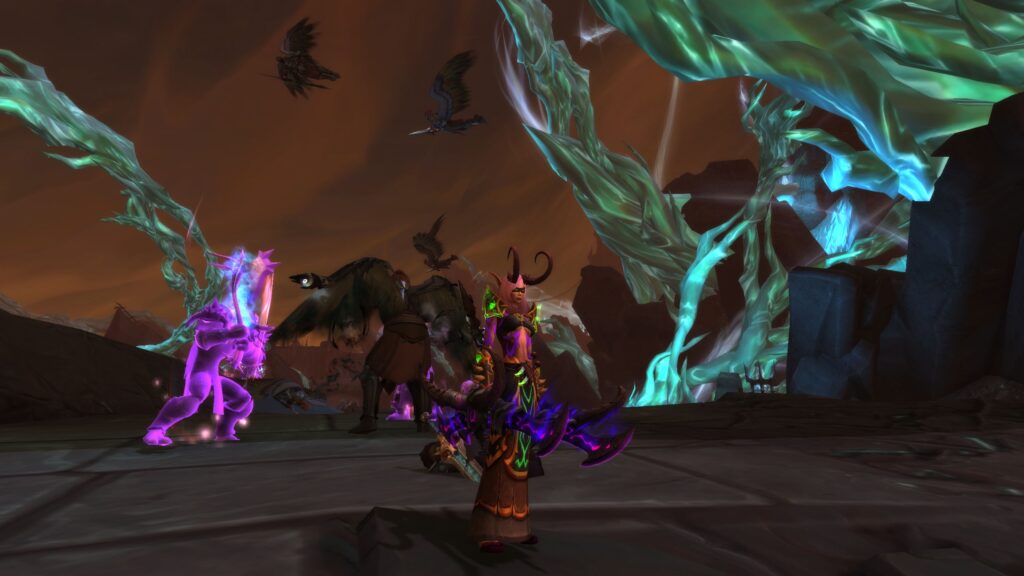
It redefined the way you interacted with the game world, adding a new dimension to exploration and strategy. Ultimately, flying mounts became a staple feature, enriching your World of Warcraft experience.
Wrath of the Lich King Innovations
Wrath of the Lich King’s release marked a pivotal moment in World of Warcraft’s evolution, introducing groundbreaking innovations that reshaped gameplay dynamics. One of the most significant additions was the introduction of the death knight, the game’s first hero class. As a player, you began at level 55, bypassing early levels, and immediately immersed yourself in complex mechanics unique to this class.
Death knights wielded runes and runic power, offering a fresh playstyle that stood apart from existing classes.
In addition to the new class, Wrath of the Lich King brought several new mechanics that enriched the gameplay experience. You encountered a more dynamic questing system, including phasing technology, which allowed the world around you to change based on your actions.
This innovation made the game feel more personal and immersive.
- Death knight introduction: A hero class starting at level 55 with unique abilities.
- Phasing technology: World changes based on player actions, enhancing immersion.
- Achievements system: New challenges and rewards for players to pursue.
These innovations and others made Wrath of the Lich King a landmark expansion, setting new standards for what World of Warcraft could offer.
Cataclysm Class Overhauls
In Cataclysm, you saw a significant overhaul of class mechanics, starting with a complete redesign of the talent trees, which were streamlined for more meaningful choices.
New class abilities were introduced, enhancing unique playstyles and expanding tactical options during combat.
Role specialization changes further refined each class’s focus, ensuring that your character could excel in specific roles like tanking, healing, or damage dealing.
Talent Tree Redesign
With the launch of the Cataclysm expansion, World of Warcraft players witnessed a significant overhaul of the talent tree system, transforming how classes were customized and played. The redesign aimed to streamline talent choices, offering a more focused path for each specialization. This change encouraged players to contemplate more strategically about talent synergies, blending different abilities to enhance specific gameplay strategies.
You could no longer just fill out all the talents in one tree; instead, you’d to make impactful decisions that suited your playstyle.
The new system also introduced a level of accessibility, allowing both new and veteran players to understand and engage with their class more intuitively. It simplified the process, yet offered depth through meaningful choices. With fewer but more impactful talents, you could see immediate results in your character’s performance.
- Focused Specialization: Players were required to spend 31 points in their primary tree before accessing others, resulting in clearer class roles.
- Streamlined Choices: Fewer talents meant each selection carried more weight, impacting your character’s abilities directly.
- Strategic Gameplay: Players had to contemplate how talents worked together, enhancing combat effectiveness through synergy.
These changes marked a pivotal moment in WoW’s class evolution.
New Class Abilities
Players dove into the Cataclysm expansion to find their classes transformed with new abilities, shaking up established gameplay dynamics. The overhaul introduced a fresh set of tools, reshaping how you approached your role in Azeroth. This update brought a focus on class synergy dynamics, encouraging you to think strategically about how your abilities interacted with those of your party members. As a result, teamwork became more vital, fostering a deeper understanding of each class’s strengths and weaknesses.
The Cataclysm expansion also marked an essential phase in the ability pruning evolution. Blizzard streamlined abilities, removing redundant or rarely used skills, allowing you to focus on core competencies. This pruning aimed to reduce complexity, making gameplay more accessible without sacrificing depth. Instead of overwhelming you with options, classes were refined to highlight their unique identities and strengths.
With these changes, each class felt distinct, offering a more engaging and rewarding experience. The introduction of new abilities meant you needed to adapt quickly, learning how to incorporate them into your gameplay. The evolution prompted players to re-evaluate their strategies, ensuring that your class remained competitive and effective in the ever-changing world of Azeroth.
Role Specialization Changes
As you adjusted to the new class abilities, Cataclysm’s class overhauls also brought major changes to role specializations, redefining how each class contributed to group dynamics. These changes emphasized role flexibility, allowing you to adapt to different playstyles and group needs.
The specialization impact was profound, as each class received distinct abilities that carved out unique niches within hybrid roles. This led to significant meta shifts, where utility changes became essential in group compositions.
- Playstyle evolution: You’d to rethink your approach, as hybrid roles now offered more versatility, demanding strategic decisions for peak performance.
- Tank dynamics and damage mitigation: Tanks saw changes in their ability to absorb and redirect damage, enhancing their role in protecting allies.
- Healing diversity and DPS roles: Healers experienced a broader range of tools for keeping allies alive, while DPS roles needed to balance damage output with new utility responsibilities.
These changes necessitated a reevaluation of how you approached battles, emphasizing the importance of adapting to new strategies.
The changes in Cataclysm laid the groundwork for future expansions, influencing how classes would continue to evolve with each new iteration of World of Warcraft.
Mists of Pandaria: Monks Arrive
In the expansion Mists of Pandaria, Blizzard introduced the Monk class, bringing a fresh martial arts-themed playstyle to World of Warcraft. As a player, you discovered monk gameplay that emphasized class synergy.
The Monk class offered three distinct specializations: Brewmaster tanking, Windwalker DPS, and Mistweaver healing, each providing unique roles in groups and raids. Brewmasters excelled in mitigating damage with their elusive techniques, while Windwalkers delivered fast-paced, melee DPS. Mistweaver healing mechanics focused on a mix of healing spells and melee attacks, offering a dynamic playstyle.
Monks were designed with careful attention to PvP balance, ensuring that each specialization could contribute effectively in battlegrounds and arenas. The class’s lore integration added depth to the game, drawing inspiration from martial arts and Eastern philosophies.
When creating a Monk, race selection became vital, as not all races could embrace this discipline initially. The Pandaren, central to Mists of Pandaria, naturally fit this role, enhancing the thematic experience.
Blizzard’s design inspiration for Monks stemmed from traditional martial arts, emphasizing fluidity and agility. This design choice offered a unique and engaging experience, distinct from existing classes, enriching World of Warcraft’s diverse class lineup.
Warlords of Draenor Adjustments
With the release of Warlords of Draenor, the World of Warcraft landscape shifted, bringing significant adjustments to the game’s classes, including Monks.
You found a renewed focus on class identity, ensuring each class felt unique and distinct in its abilities and playstyle. This expansion streamlined abilities, reducing button bloat to simplify gameplay while retaining the essence of each class.
As a player, you experienced tangible changes that impacted how you interacted with your character and the world around you.
- Ability Pruning: Many abilities were removed or consolidated, making each class’s toolkit more streamlined and focused.
- New Talents: Redesigned talent trees allowed for more meaningful choices, enhancing class identity and specialization.
- Stat Squish: Numbers were scaled down for clarity, making it easier to understand your character’s power level.
Faction rivalry intensified in Warlords of Draenor, with the narrative strongly highlighting the conflict between the Horde and Alliance.
This backdrop amplified the importance of your class’s role within your faction, urging you to contribute to its success in the larger battle for supremacy.
Legion and Artifact Weapons
The journey from Warlords of Draenor to Legion brought another wave of monumental changes to World of Warcraft, introducing Artifact Weapons as a core feature. In Legion, each class and specialization received a unique Artifact Weapon, deeply tying into the lore of the game.
These weapons weren’t just for show; they fundamentally changed how you interacted with your class mechanics. With Artifact Weapons, you accessed artifact powers, a new system that allowed you to enhance your character’s abilities further.
You would find yourself collecting Artifact Power through quests, dungeons, and raids to strengthen your weapon. This power was then spent to free traits in a talent-like tree specific to your Artifact Weapon. Each trait improved your character’s abilities, offering a sense of progression and customization that was tightly linked to your chosen specialization.
This system encouraged deeper engagement with your class, as you made decisions that affected your gameplay style. Artifact Weapons also introduced new class mechanics, allowing for a more tailored experience.
You could explore different paths within your class, providing variety in how you approached challenges. The combination of lore-rich weapons and customizable powers made Legion a unique chapter in WoW’s evolution.
Battle for Azeroth Tweaks
In the Battle for Azeroth expansion, you’ll notice significant class balance adjustments aimed at ensuring fair gameplay across all classes.
New abilities were introduced to give you more options in combat, adding variety and depth to your gaming experience.
Additionally, the talent system saw changes that allowed for more customization, letting you tailor your character’s abilities to better suit your playstyle.
Class Balance Adjustments
During the Battle for Azeroth expansion, World of Warcraft introduced significant class balance adjustments that aimed to refine gameplay and enhance player experience. These changes were designed to address the evolving dynamics of cross faction gameplay and to guarantee that each class maintained a strong sense of role identity.
By doing so, Blizzard hoped to make each class feel more distinct, providing players with a unique experience tailored to their chosen role.
The adjustments included the following:
- Buffs and Nerfs: Adjusting damage, healing, and defensive abilities to balance power between classes. This guaranteed no one class dominated the game, maintaining fairness for all players.
- Utility Changes: Some classes gained or lost abilities that contributed to group dynamics, impacting how they fit into team strategies during raids and dungeons.
- Role Focus: Emphasizing the core strengths of each class, allowing players to experience the true essence of their chosen role, whether tanking, healing, or dealing damage.
These adjustments weren’t just about numbers; they were about preserving the identity of each class while guaranteeing fair and engaging gameplay.
Such changes underscored Blizzard’s commitment to keeping World of Warcraft a balanced and exciting experience for all players.
New Abilities Introduced
Imagine diving into the World of Warcraft’s Battle for Azeroth expansion, only to find your class equipped with thrilling new abilities that redefine your gameplay experience. These new abilities bring a fresh layer to your character’s toolkit, enhancing both ability synergy and class identity.
Each class received unique skills that not only improved individual playstyles but also allowed for greater interaction within group settings. For example, Druids gained “Wildfire,” which increased the synergy between their healing and damage-dealing forms, reinforcing their versatile class identity.
In this expansion, Blizzard Entertainment focused on deepening class identity by introducing abilities that highlighted each class’s core strengths. Hunters discovered “Primal Instincts,” a skill that boosted their pet’s capabilities, aligning perfectly with their role as masters of the wild.
Meanwhile, Mages acquired “Time Warp,” an ability that enhanced their control over time, emphasizing their power over magic.
This expansion’s new abilities encouraged players to experiment and optimize their playstyles. By doing so, you could explore fresh tactics and strategies, allowing for a more personalized and effective approach to battles.
These additions not only invigorated gameplay but also reinforced what makes each class distinct and compelling in World of Warcraft.
Talent System Changes
As you explore the new abilities introduced in Battle for Azeroth, you’ll find that Blizzard Entertainment also revamped the talent system to further enhance class customization. This expansion brought significant changes, especially to hybrid classes, allowing players to tailor their characters more precisely.
The talent system now offers a wider array of choices, providing you with the flexibility to adapt your gameplay to different situations. This change was driven by the need to incorporate versatility mechanics, giving players the ability to switch roles or enhance specific skills without feeling locked into a single path.
Blizzard’s approach to the talent system in Battle for Azeroth focused on:
- Increased adaptability: Hybrid classes can now more easily adjust their role in raids or dungeons.
- Enhanced versatility: With new talent options, you can focus on increasing your character’s utility in combat.
- Streamlined choices: The new system simplifies decision-making, allowing you to switch talents based on your needs without the burden of complex prerequisites.
These tweaks aim to provide a more engaging and dynamic experience, ensuring that you can enjoy your class’s full potential while maintaining the excitement of exploring new strategies and combinations.
Shadowlands and the Covenant System
In the intricate world of Shadowlands, the introduction of the Covenant system offered a fresh layer of depth to World of Warcraft’s class dynamics. You choose from four Covenants—Kyrian, Necrolord, Night Fae, or Venthyr—each providing unique Covenant abilities that impact how you play your class.
These abilities enhance class diversity, allowing for varied playstyles and strategies. Soulbind mechanics further enrich this experience by letting you bond with characters within your chosen Covenant, revealing passive bonuses and abilities. Through Conduit customization, you can tailor these bonuses to suit your preferred playstyle, enhancing specific skills or attributes.
Shadowlands lore deeply intertwines with these systems, immersing you in the story while influencing your gameplay choices. Player feedback has been essential in shaping the Covenant system, leading to adjustments over time, especially in PvP situations where balance is key.
Covenants also impact endgame content, offering different rewards and challenges based on your choices. This system encourages you to engage deeply with the game, exploring the synergy between lore and mechanics.
With its focus on customization and choice, the Covenant system has left a lasting impression on World of Warcraft’s evolving class landscape.
Dragonflight: The Latest Changes
Soar into the skies with Dragonflight, the latest major update to World of Warcraft, which brings transformative changes to classes and gameplay. This update introduces new dragonflight abilities that redefine how you approach battles. With a fresh focus on dragonflight class identities, the game now offers unique experiences tailored to each class’s strengths and lore.
This update also emphasizes dragonflight gameplay, creating a more immersive experience for players.
Dragonflight talent options have been revamped, providing more flexibility and meaningful choices. Players can customize their specs through in-depth dragonflight specs analysis, ensuring their builds align with individual playstyles. The update’s dragonflight balance changes aim to create a fairer and more competitive environment. As a result, classes are more balanced, making sure no class feels overpowered or underwhelming.
Player feedback has played a significant role in shaping the dragonflight design philosophy. Developers have listened carefully, implementing changes that reflect the community’s desires and concerns.
Key highlights include:
- Improved class synergy: Abilities now complement one another, enhancing overall gameplay.
- Streamlined talent trees: Easier navigation and selection of talents.
- Enhanced visuals and effects: A more visually stunning experience.
These changes mark a new era for World of Warcraft, offering a refined and engaging experience.
Conclusion
You’ve journeyed through the ever-shifting landscape of World of Warcraft’s classes, witnessing transformations akin to a chameleon changing its colors. From the birth of classic classes to Dragonflight’s latest updates, the game’s evolution mirrors a river’s course, constantly flowing and adapting. Each expansion, from Monks in Mists of Pandaria to the Covenant system in Shadowlands, added layers of complexity and choice. It’s a proof of WoW’s enduring ability to reinvent and captivate players worldwide.
Home
Leave a Reply